
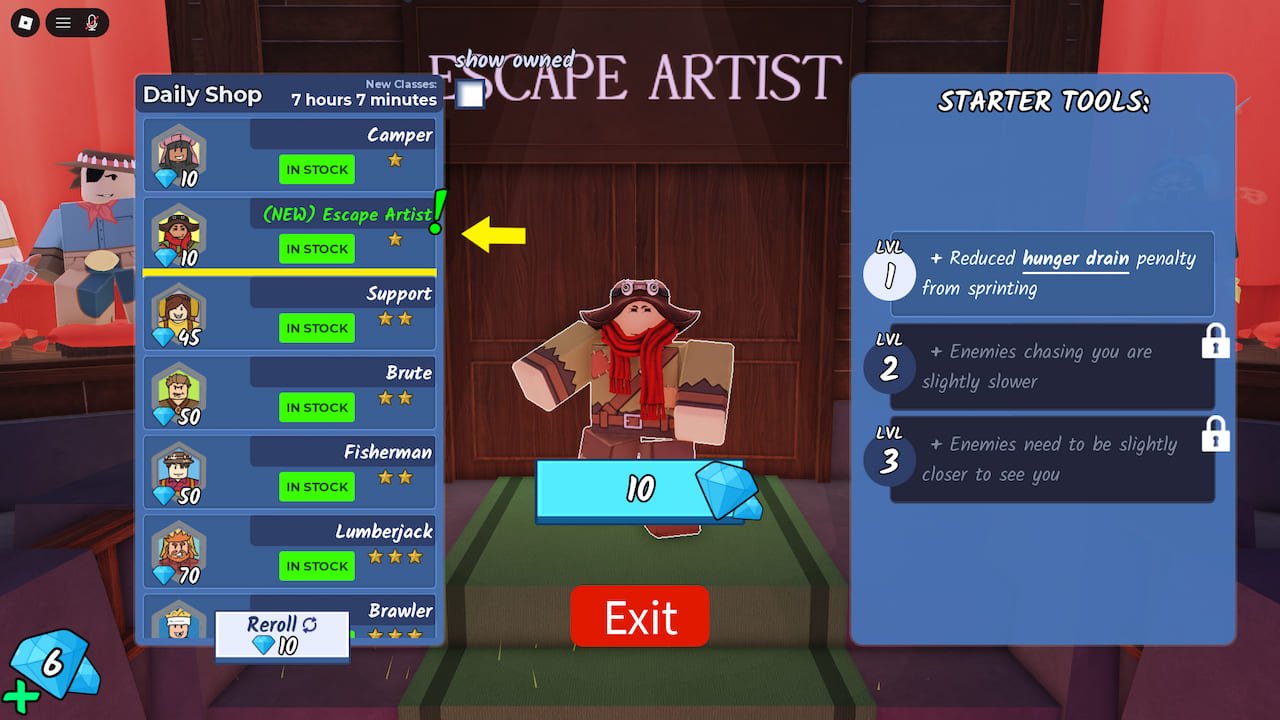
Some players treat the forest like an arena. They pick up the biggest weapon they can find and go looking for trouble. Others have figured out that survival is often about something quieter: knowing when to leave. The Escape Artist class was built for that second group, and once you understand how it shapes a run, it can change the way you move through every night.
This guide looks at what the class actually does, where it fits next to the other classes that arrived alongside it, and the habits that help it shine. At ReactlyBlox we enjoy classes like this one because they reward thinking ahead rather than reacting.
Where the Escape Artist Came From
The Escape Artist joined 99 Nights in the Forest as part of a classes update that also introduced the Elemental and the Woodsman. Each of the three brought a different personality to the game. The Elemental leans on the biome you choose, starting with a matching helmet. The Woodsman grows stronger by chopping, with an axe that levels up as trees fall. The Escape Artist, by contrast, is all about mobility and staying alive on the move.
Like other classes in the game, it is unlocked with Diamonds, the game’s premium currency, which you can earn through play. Once it’s yours, you choose it before a run starts, and its effects follow you from the first night onward.
The Core Perk, Explained Simply
The heart of the class is a single, very practical advantage: sprinting drains less hunger than usual. In most runs, sprinting is a tradeoff. It gets you away from danger or across the map quickly, but it empties your hunger bar and forces more trips back to camp for food. The Escape Artist softens that cost.
That might sound modest, but think about how often you sprint in a typical night. Running from wolves, rushing to grab supplies before dark, hurrying back to the fire, scouting a new area of the map. Every one of those moments becomes a little cheaper. Over a long run, the savings add up to fewer emergency meals and more freedom to explore.
What it does not do
It’s worth being clear about the limits, too. The perk doesn’t make you faster than other players, and it doesn’t stop enemies from chasing you. It simply means that running costs you less. Skill still decides whether you get away; the class just makes that skill easier to afford.
Levels and Class Challenges
Every class in the game has three levels, and you advance by completing challenges tied to that specific class. The game presents these challenges inside its class menu, and they’re the best guide to what the developers expect each class to do well. If you’re unsure what to work on next, open the menu and read your current objective before heading out.
The quest badge
When the classes update launched, each new class came with its own quest badge. For the Escape Artist, the challenge fit its theme perfectly: be chased by a pack of alpha wolves all at once without needing to defeat them. Collecting the quest badges for all three new classes unlocked a decorative bonsai tree for your camp. Because event badges can be time-limited, check the game’s badge list on Roblox to see which ones are still available when you play.
How to Play the Class Well
The Escape Artist rewards players who plan their routes. Here are the habits that make the biggest difference.
Scout during the day, sprint with purpose at night
Use daylight to learn the layout around camp: where the safe paths are, where the trees thin out, where you can break line of sight. When night falls and something starts chasing you, you’ll already know where to run instead of guessing.
Lead danger away from your team
In group runs, an Escape Artist makes a natural decoy. Because sprinting costs you less, you can pull a dangerous enemy away from teammates who are gathering wood or carrying supplies, then circle back once it loses interest. Talk to your team first so nobody runs into the same trouble you just escaped.
Carry snacks anyway
Reduced hunger drain is not zero hunger drain. Keep a small food supply on you so a long chase doesn’t leave you stranded. The class buys you time; it doesn’t replace good preparation.
Know when not to run
Sprinting into an unexplored part of the forest at night can be riskier than standing your ground near the fire. Running is the Escape Artist’s strength, but direction matters as much as speed. Head toward light and familiar ground whenever you can.
Who Should Pick It
The Escape Artist suits a few kinds of players especially well:
- Explorers who like to cover a lot of ground in search of chests, materials and new areas.
- Support players in a group who handle supply runs while others build and defend.
- Newer players who are still learning combat and would rather avoid fights than lose them.
- Solo survivors who need to manage hunger carefully because there’s no one to share the work with.
If you love direct combat or your favorite part of a run is chopping trees as fast as possible, the Woodsman or another combat-focused class may feel more natural. There’s no wrong choice. The classes are designed to complement each other, and a mixed group often survives longer than one where everybody picks the same role.
Pairing It With Your Group
A balanced team might include one player who keeps the campfire strong, one who gathers and crafts, and one who scouts and handles the risky errands. The Escape Artist slots naturally into that last role. When you return from a successful run with supplies and no one chasing you, the whole team benefits.
It also helps to agree on a meeting point. If you lead an enemy away, your teammates should know where you’ll circle back so they can be ready, or so they can stay clear until the danger has passed.
Common Mistakes to Avoid
Even experienced players slip into a few habits that undercut this class. The first is treating cheaper sprinting as unlimited sprinting. It’s easy to run everywhere just because you can, and then discover your food supply is gone halfway through a long night. The second is running in a straight line. Enemies are much easier to lose when you weave around trees and rocks, so use the terrain instead of relying on distance alone. The third is drifting too far from camp while being chased. A chase that ends deep in the dark forest can be worse than the danger you started with. Finally, don’t forget to check your class challenges. They’re the clearest path to leveling up, and ignoring them means leaving progress on the table.
A Word on Safety and Fair Play
Popular games like this attract websites promising instant Diamonds or unlocked classes through outside tools. Those offers don’t come from the developers, and using third-party scripts breaks the Roblox Terms of Use. Diamonds are earned in the game itself, and that’s the only reliable way to unlock a class without risking your account.
Final Thoughts
The Escape Artist is a class for people who like to win by being clever. It doesn’t promise bigger damage or flashy powers. Instead, it gives you the freedom to move, explore and escape without your hunger bar holding you back. Learn the forest, plan your routes, and let your teammates know you’ve got the scouting covered. We’ll keep exploring every corner of 99 Nights in the Forest here at ReactlyBlox, so you can spend more nights surviving and fewer nights starting over.